College radio stations are student-run broadcasters, usually on FM or streaming online, that exist to play music a commercial programmer would never risk. They matter because they still do the one job the rest of the radio map has largely abandoned: giving unknown records a first, patient hearing in public.
The economics explain the freedom. Most campus stations answer to a student activities fee or a faculty adviser rather than an ad market, so nobody has to defend a playlist to an advertiser. That structure is why a Tuesday-morning show can spend twenty minutes on a self-released EP without anyone asking how it tested.
The map itself helps explain the culture. The United States carries a dense lattice of small campuses, and some states are thick with them — University Review's directory of North Carolina colleges runs from Duke and UNC Chapel Hill down to schools of a few hundred students, each a potential home for a studio, a transmitter and a stack of unplayed submissions. Where there is a campus, there is very often a station.
What exactly is a college radio station?
A college radio station is a broadcast or streaming outlet run primarily by students, typically under a faculty or staff adviser, with a mission rooted in the educational purpose of its host institution. Some hold full-power FM licenses; others broadcast on low-power FM, carrier current, or online only. The common thread is governance: students pick the music, host the shows and make the programming calls.
That governance detail does more work than it sounds like. Because the staff turns over every few years, the station's identity belongs to an institution, not a personality. Formats evolve, but the underlying commitment — air what deserves hearing, not what rates — survives each graduating class.
It also explains the sound. A commercial station chases a format; a campus station curates a sensibility. One show might be freeform in the oldest sense, with a DJ building an hour from instinct, while the next is a strict specialist hour devoted to a single scene or era.
How does a song end up on campus airwaves?
Music directors collect submissions from labels and artists, listen to what arrives, and chart the tracks they genuinely rate. Those weekly charts, reported to industry chart services, are how a college record pool talks to the wider business. There is no consultant and no call-out research in the loop.
For a working musician, that process is the point. A self-released single can land on a music director's desk on merit alone, and a spin on a quiet Tuesday night is a real broadcast — often the first time the song meets strangers. We have covered the mechanics in detail in our piece on how a song gets added to college radio rotation.
The filtering is human and small-batch. A music director might hear hundreds of submissions a term and add a few dozen. That scarcity is the value: getting through means someone with taste and no commercial stake chose your record.
Why do artists still need college radio?
Because the discovery pipeline still runs through it. Streaming platforms surface what already has momentum; campus stations help create it. A record that charts across a few dozen college stations accumulates exactly the early evidence — spins, charts, word of mouth — that labels, bookers and festival programmers look for.
History backs the pattern up. From the alternative and indie boom onward, the bands that crossed over almost always logged years of campus play first, and the stations that backed them early are remembered with the same affection as the bands. Our longer argument for that claim lives in why college radio still breaks artists first.
What this means for a new artist is practical, not romantic: a college campaign is cheap, targeted and honest. You mail records to music directors who actually listen, and the feedback you get — adds, charts, silence — is real information about the music.
What happens inside the station?
The working life is unglamorous and specific. Students train on the board, learn to read a log, and take the shifts nobody fights over — which is where the station's stranger culture lives, as our look at the late-night radio host documents. The music director maintains the adds and the charts. The engineer keeps the transmitter honest.
Programming sits somewhere between anarchy and structure. Many stations run a core rotation during daytime hours and hand evenings to freeform shows, a split our explainer on how a program director builds a weekly schedule unpacks for stations of any size.
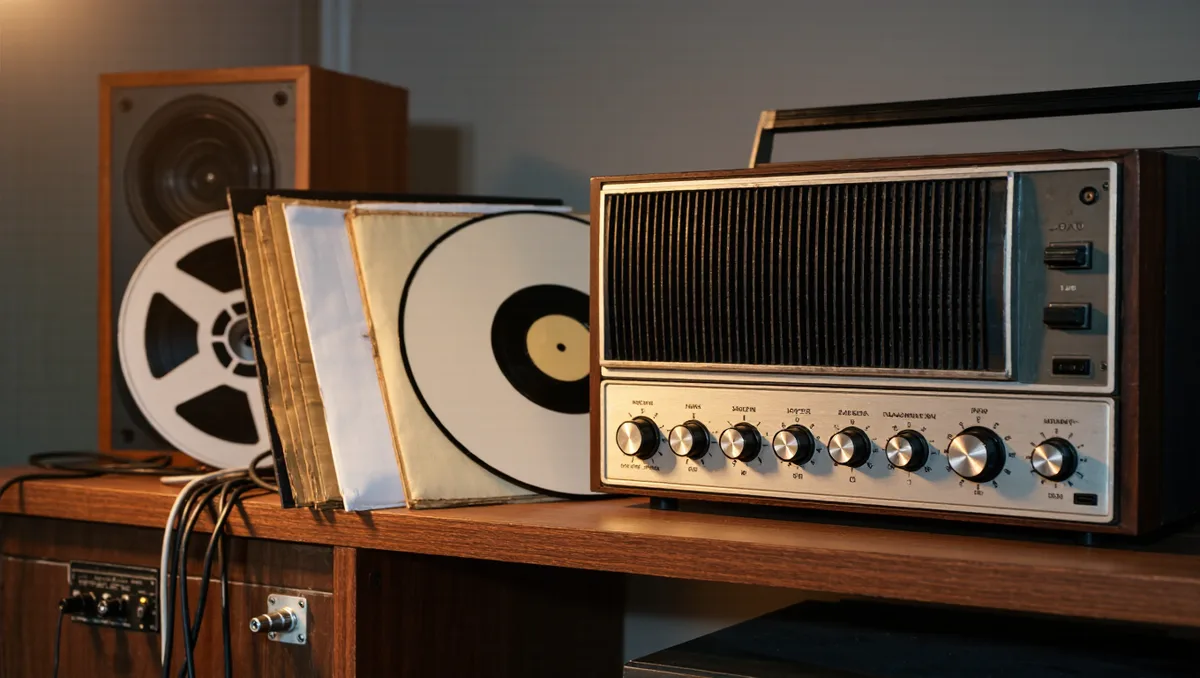
The craft is older than the students doing it. Vinyl still gets cued on air at plenty of campus stations, and the technique — the back-cue, the slipmat, the feel for when the needle drops — is its own small discipline, as covered in how DJs cue vinyl on air.
How do these stations survive financially?
Thinly, but deliberately. Campus stations typically draw on student fees, institutional support and listener donations rather than advertising, which is what preserves their independence. The trade-offs and tactics look a lot like the community-radio model, and our explainer on how community radio stations fund themselves without ads maps the shared playbook.
Survival has never been the same as reach. Signals are small, budgets are smaller, and the audience is measured in thousands rather than hundreds of thousands. But reach was never the mission. A station that puts forty unfamiliar records a week in front of a few thousand curious listeners is doing work no bigger signal can replicate.
Our analysis: the durable value of college radio stations is not nostalgia but function. They are the last broadly distributed tier of the radio ecosystem where taste, not ad revenue, decides the playlist — and as long as new music needs a first hearing somewhere, that function keeps the lights on.
Where does college radio go next?
Online, mostly. Streaming has loosened the tie between a station and its transmitter footprint, and many campus outlets now treat the FM signal as one delivery channel among several. The hybrid future — broadcast hour plus podcast afterlife — is already normal, as our piece on the radio-podcast hybrid show describes.
What the evidence supports is modest and clear: the format's survival has never depended on ratings, and its usefulness to listeners and artists has not diminished with its signal reach. What remains unknown is how the next funding squeeze — always the real threat — gets met. The stations that last will be the ones that keep the mission legible to the students paying for it.