How to find new music without an algorithm comes down to following people rather than feeds: the shop clerk who knows your last three purchases, the community DJ with a forty-year show, the friend who hands you a burned disc and says nothing. Those routes still work, and they work better than most listeners expect. The catch is that they ask something of you — a visit, a request, an hour of attention — where the feed asks nothing at all.
That small cost is the point. A recommendation from a person carries a reason attached. Someone chose this song for you, and they will usually tell you why. This guide walks through the human-powered routes that have kept music discovery alive long before the feed, and how to make each one work now.
It is worth pausing on the word itself. According to The Free Dictionary, "best" means most suitable or desirable for a particular purpose — not a universal ranking. The best discovery method is the one that fits how you actually listen, which is why this piece reads more like a menu than a league table.
Why does the record shop still work?
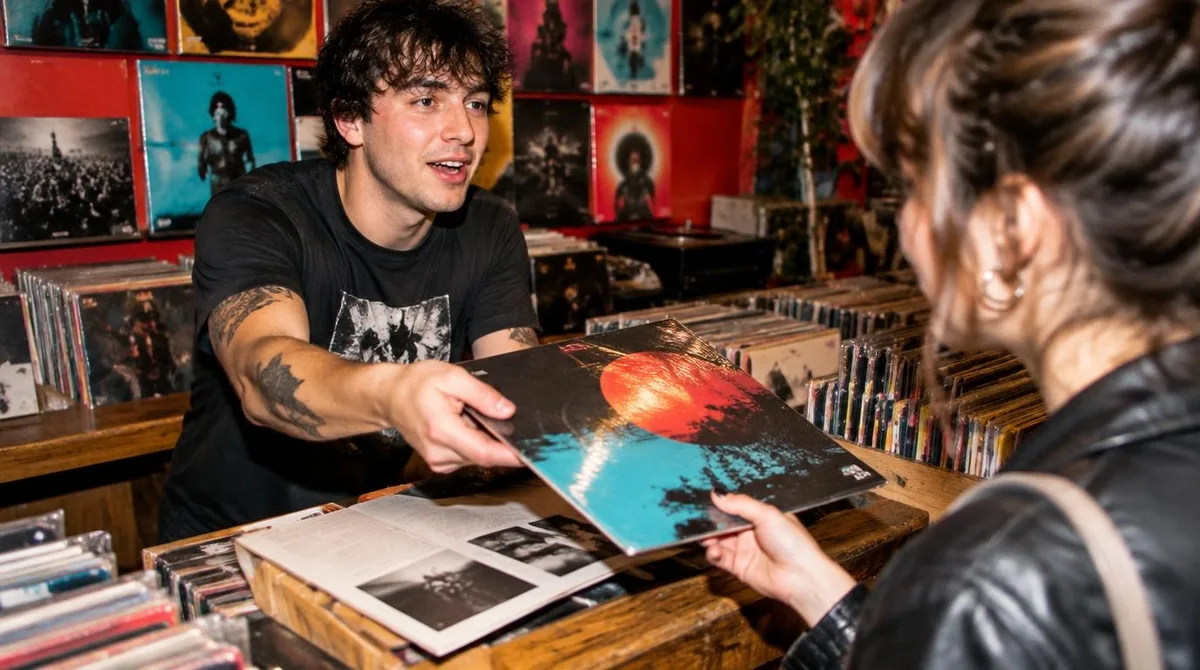
A good record shop is a filter with a face. The person behind the counter hears hundreds of records a week, remembers what you bought, and can translate "I liked that last one" into something you have not heard. That conversation is the whole product. You can browse the new arrivals wall cold, but the real discovery happens when you describe what you own and let someone build from it.
The practical move is simple and repeatable. Go in with one reference point — a record, an artist, even just a mood — and ask for two things: something adjacent to it, and something the staff loves that has nothing to do with it. The first answer maps your taste. The second stretches it. Buying one of each keeps the loop honest, because you owe the recommendation a real listen either way.
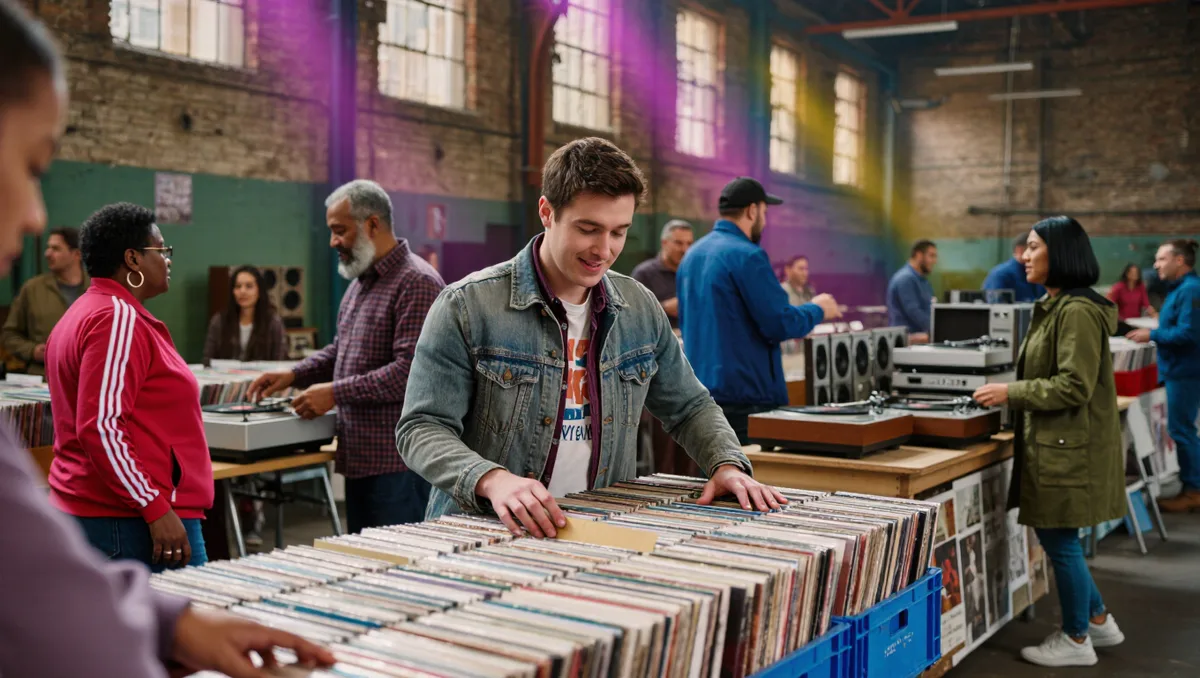
Shops also function as noticeboards for a scene. In-store gigs, local releases, flyer stacks for nearby shows — all of it sits at the counter. If you want to know what is happening in your city's music before anyone writes about it, the shop is where that information lives first. Our guide to how record stores still drive music discovery goes deeper on that role.
What should you listen to on community and college radio?
Community and college stations are the closest thing radio has to a person making choices. Programmers at these stations pick tracks by hand, often because they heard them once and could not shake them. There is no chart logic and no label quota in the booth — just taste, and the freedom to play a nine-minute B-side at two in the afternoon if it deserves it.
The way in is easier than most listeners assume. Find the station's weekly schedule, pick one specialist show that matches a genre you already care about, and make it a habit. A reggae show, a jazz show, a local-music show — each one is a curated hour built by someone who answers email. Most stations archive their playlists, so you can note tracks as you hear them and chase them later.
This is also where the industry itself looks first. Independent labels pitch songs to these stations directly, precisely because a single programmer's support can start a word-of-mouth chain no campaign can buy. Our piece on how labels pitch songs to independent radio explains that pipeline from the other side. If you want to understand the whole medium, start with our radio coverage.
How do liner notes and credits lead somewhere new?
Every record you already love contains a map. The liner notes and credits name the producer, the session players, the label, the studio, the engineer — and each of those names is a thread. Follow a producer across three albums and you will hear a sensibility emerge. Follow a session bassist and you may land on a scene you never knew existed.
The method costs nothing but attention. Next time a record grabs you, read the credits before you move on. Pick one name you do not recognise and search their discography. Then pick one name from that record. Two or three hops from any album you love, you are listening to something no feed would ever have surfaced for you, because the connection is a person, not a similarity score.
It also teaches you to hear better. Once you know who played what, you start noticing arrangement choices — the drum sound, the reverb on a vocal, the odd instrument buried in the mix. Our guide to reading liner notes and credits like an insider walks through what each credit actually means.
Do blogs, zines and fan communities still break artists?
They do, though the landscape has thinned. The independent music blog survives as a labour of love — a writer with day jobs covering the releases the big outlets skip. Zines have come back the same way, printed cheaply and sold at shows. Neither has reach, but both have conviction, and conviction is what turns a reader onto a band nobody has heard of yet.
Fan communities work on a different engine: collective attention. A forum thread, a group chat, a subreddit devoted to a microgenre — these spaces surface artists months before any press cycle, because a hundred people listening closely will always out-notice a hundred thousand people scrolling past. Our reporting on how fan communities find artists before the industry does traces how that early attention shapes careers.
The discipline here is choosing your sources rather than drowning in them. Pick two blogs that match your taste and read them weekly. Join one community and lurk until you understand its standards. Depth beats breadth every time in human-powered discovery. If you want a starting point, our list of music blogs that still break artists is a fair map.
What this means for your listening week
None of these routes requires you to abandon streaming. The healthiest setup uses both: human sources to find the music, the platform to hear it conveniently afterwards. The feed is a delivery van. It is not the person who told you what to order.
A workable weekly rhythm looks like this:
- One visit or browse session at a record shop, with one question asked of the staff.
- One specialist radio show, heard start to finish, playlist noted.
- Credits read on anything that stuck, one name followed per record.
- One pass through your chosen blog or community, one artist investigated.
That is perhaps three hours a week. It will surface fewer songs than the feed — and the ones it surfaces will stay with you, because you found them through a chain of people who cared. That is the whole case for doing it the slow way. For a broader map of the territory, see our guide to the best ways to discover new music beyond the algorithm.