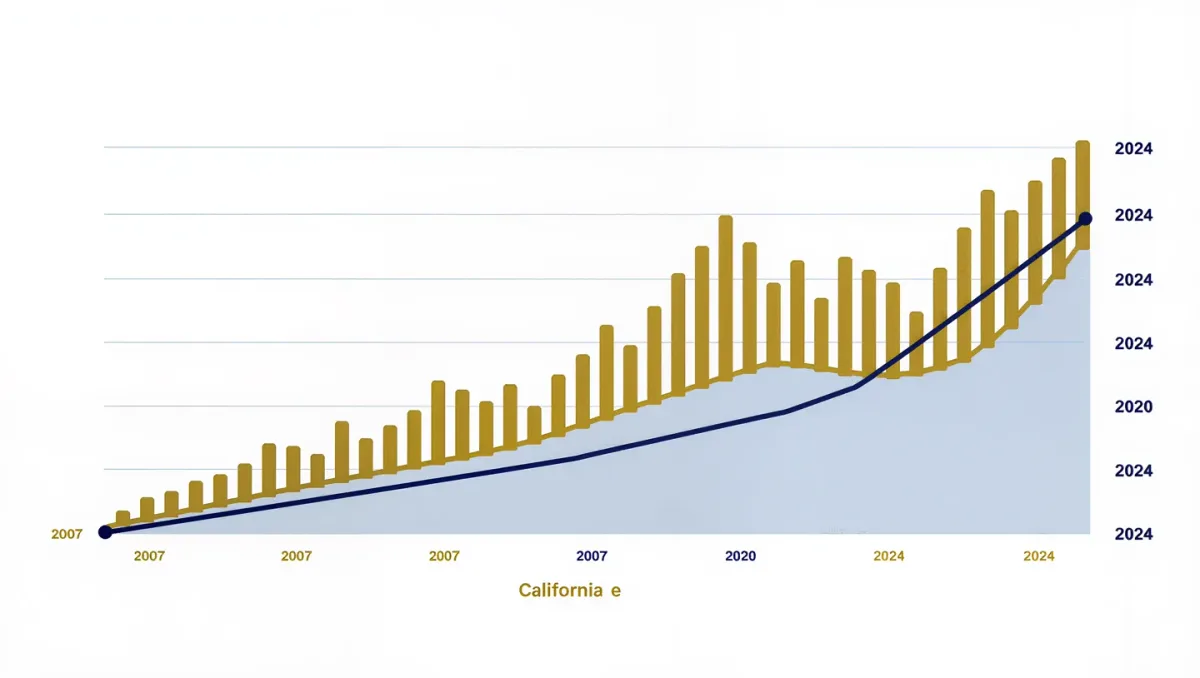
Independent record stores drive discovery by being physical filters: a staff that argues about music for a living, bins arranged by logic rather than engagement data, and the ability to hear something playing in the room and ask what it is. The format was supposed to die twice — first to big-box retail in the 1990s, then to streaming in the 2010s — and instead, as of the mid-2020s, vinyl has posted nearly two decades of consecutive annual growth in the US, with independent stores holding the majority of vinyl's retail channel. Discovery infrastructure that was predicted to vanish became a growth category.
AA Digital Sound writes about discovery infrastructure; nothing here is retail advice, and no store named is endorsed beyond its documented history.
Why does a physical bin beat a feed for discovery?
Serendipity with structure. A streaming feed shows you what statistically resembles your history; a bin puts you alphabetically, adjacently, physically next to things you did not ask for. Crate-digging is the oldest discovery technology in pop music — the practice of flipping through records until a cover, a label or a name stops your hand — and it is documented as the foundation of hip-hop sampling culture, Northern Soul collecting and the reissue industry alike. The used bin goes further: it holds out-of-print records with no engagement data at all, which is precisely why algorithms will never surface them and stores always will.
What do staff picks actually do?
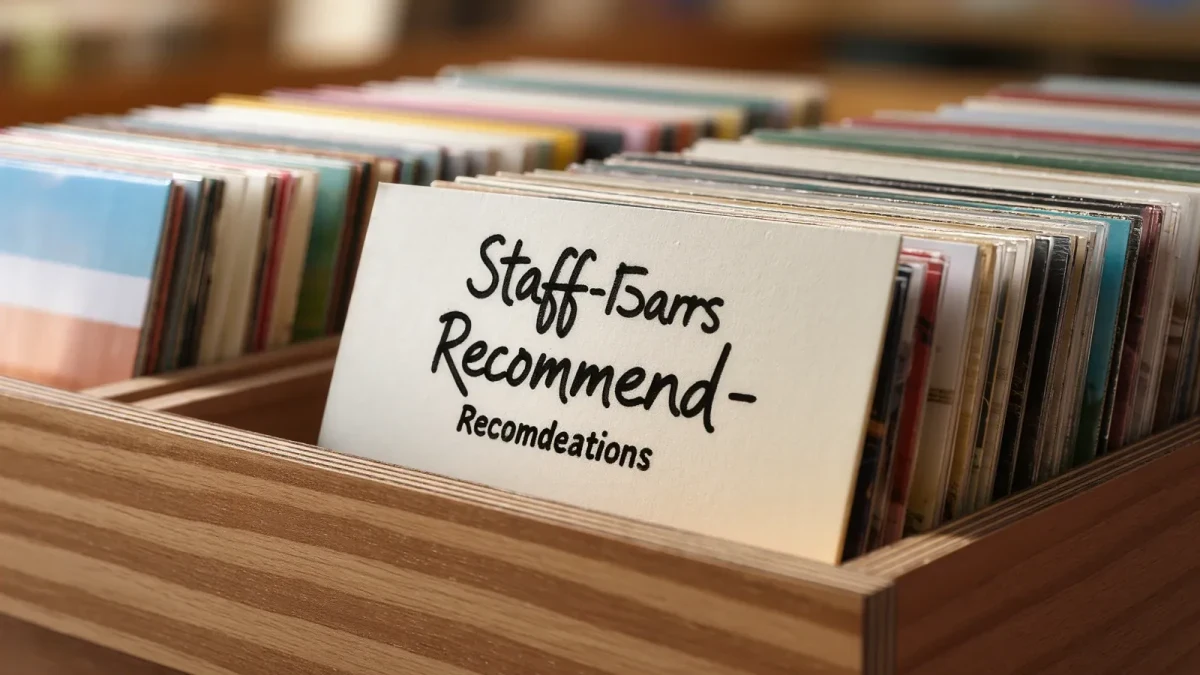
They move inventory and taste at the same time. The handwritten card is a low-tech recommendation with a named author, a commitment and a face you can return to — the accountability a playlist lacks. Store culture has produced canon-shaping filters before: the import sections of 1960s London shops where blues reissues reached a generation of British musicians, the dance counters where Chicago house and Detroit techno records reached Europe, and the Japanese stores whose genre taxonomies Western reissue labels later borrowed whole. When a clerk plays something over the house speakers, every customer in the room gets the same exposure — a broadcast in miniature, no frequency required.
What did Record Store Day change?
Record Store Day, founded in 2008 by a group of independent store owners, gave the sector an annual event with exclusive releases, queues and press attention — and the documented vinyl revival of the 2010s is inseparable from it. Its mechanism for discovery is slower than a feed: exclusive pressings pull collectors into stores, collectors buy full-price new stock while there, and labels commission reissues that would otherwise never clear the math. The event also revived the 7-inch single as a format for new bands, giving small acts a physical object a store can stock, card and hand-sell.
How do stores feed the wider discovery economy?
- Early stock decisions — a buyer ordering fifty copies of an unknown pressing is a vote that reaches press and labels.
- In-store performances, which historically broke local scenes into touring circuits.
- Hand-selling — the clerk recommendation that moves a first week's sales and shows up in chart reporting.
- Reissue consultation, where label reissue programs are built on what collectors and stores keep asking for.
- Community bulletin boards — the analog version of the forum, still where local shows are found.
Does vinyl discovery work if you stream everything?
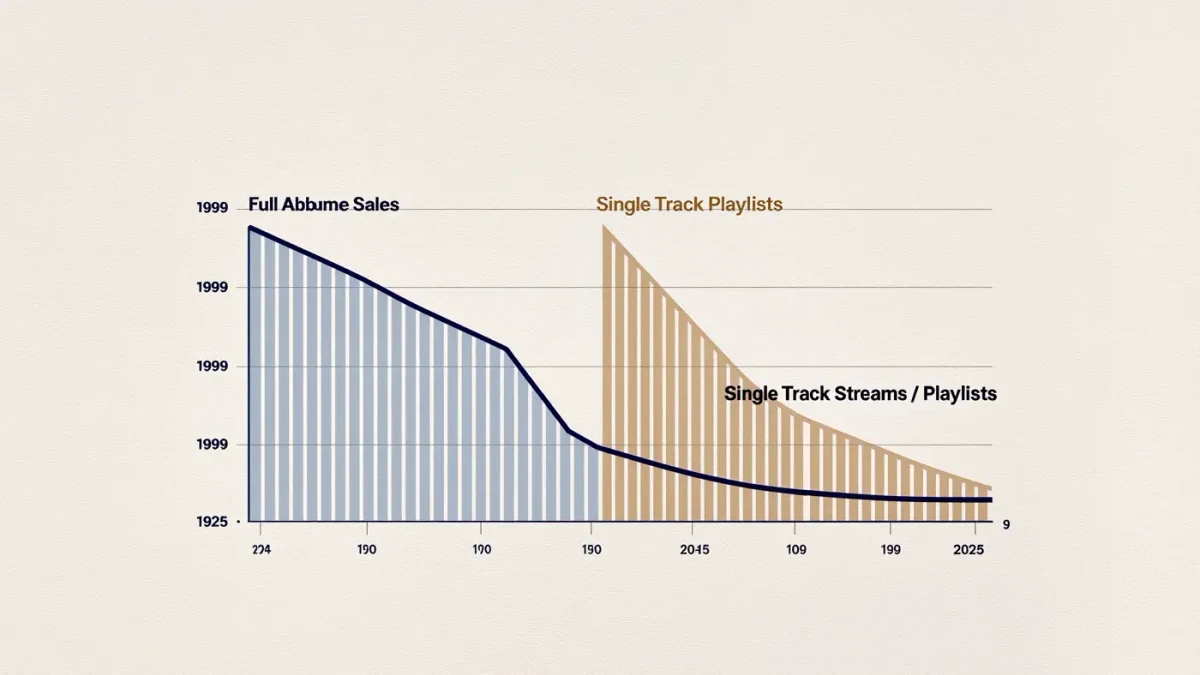
It works especially well then, because the two systems fail in opposite directions. Streaming is infinite and frictionless, which narrows taste; a store is finite and slow, which widens it. Many documented vinyl buyers stream daily and buy monthly, using records as a commitment device — the purchase forces the full-album listen the feed discourages. The Library of Congress's recorded-sound preservation programs, which the National Recording Preservation Act of 2000 set in motion, exist on the same logic: physical carriers and institutional archives keep recordings reachable that pure-demand systems let lapse.
How do you use a store as a discovery engine, practically?
Go with a question, not a list. Ask what has been moving, what was misjudged on release, and what the staff cannot stop playing — three questions that produce different answers and all bypass the bestseller shelf. Buy one unknown per visit, ideally from the used bins where the risk is the price of lunch. And read the store's own media: many independents run labels, newsletters and radio-adjacent mixtapes of in-store plays, all of which extend the bin's logic past the door. The store that answers good questions becomes, over months, the most honest recommendation engine you have access to — because it is the only one that has to look you in the eye when it is wrong.
What threatens the format now?
The documented pressures are three: rent in the city centers where music communities concentrate, the flattening of release calendars after the vinyl pressing-plant logjams of the early 2020s, and the platforms' own moves into physical retail and exclusive pressings. Stores have answered the way they always have — by deepening rather than widening. The survivors run labels and pressing clubs, host performances, publish recommendation media and function as the physical front desk of their local scenes. The best protection a listener can offer is behavioral: buy the unknown record, ask the question, and treat the store as infrastructure rather than a showroom for online orders.
A feed answers what you will finish; a bin answers what will stop your hand. Discovery lives in the second question.