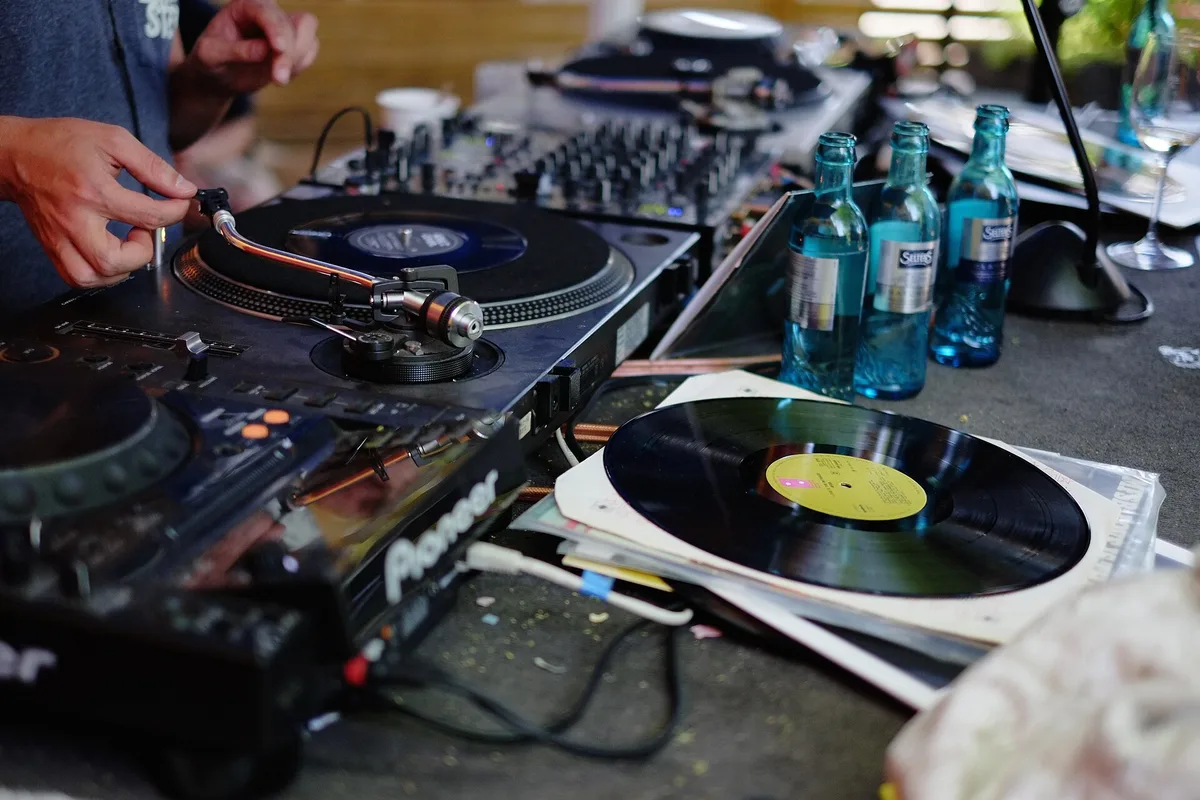
The question in the title is the plain kind — the Cambridge Dictionary defines "why" as asking for what reason — and the honest answer is craft. Daft Punk's Discovery still sounds ahead of its time because of how it was built, not when. Thomas Bangalter and Guy-Manuel de Homem-Christo took old disco and soul records, cut them into short loops, and ran those loops through filters until they sounded like nothing on the radio.
That method turned borrowed material into something new. The record doesn't sample as a nod to the past; it samples as a way of building. And that way of building — loop, filter, repeat, then bury a human voice under a machine — has shaped dance music, pop, and even film scoring ever since. Hear a filtered disco loop in a modern pop song and you're hearing this album's shadow.
How does sampling carry a whole album?
On Discovery, a sample is rarely a decoration. It is the engine. A short phrase from an old record becomes a loop, the loop becomes the backbone of a track, and everything else — drums, bass, synth — gets built around it. The duo then treat that borrowed loop like raw clay. They chop it. They pitch it. They sweep filters over it so it opens and closes like a door. For related coverage, see How record labels pitch songs to independent radio stations.
This is sampler as instrument, not sampler as shortcut. The craft sits in the editing: choosing two seconds of a song that sound ordinary in context and revealing something inside them nobody noticed. That is why the record rewards close listening. The source material is often familiar — disco, soft soul, late-seventies studio pop — but the framing is not. It's the same trick a good deep cut plays on a fan: the thrill of hearing a known thing made strange.
Our analysis: the album's futurism comes from tension. The ingredients are warm and human. The treatment is cold and mechanical. Neither wins, and the friction is the sound.
Why do the robot voices matter so much?
The vocoder — a device that turns a voice into a hybrid of speech and synthesizer — is the album's other signature. Bangalter and Homem-Christo hide real singers behind it. Emotion goes in; something between a human and a machine comes out. It reads as a mask, but it works more like a lens. The feeling survives the processing, and that's the point.
Plenty of records use a vocoder as a gimmick. Discovery uses it as a theme. The duo had already adopted robot personas, and the album extends that idea into the music itself. Voices arrive altered, repeat like loops, and dissolve into instruments. By the end, the line between singer and synthesizer stops mattering — which is, arguably, the record's whole argument about where music was heading.
What did the album borrow, and what did it give back?
The borrowing side is well documented in broad terms: the duo drew heavily on American and British disco, funk, and soft-rock records from the previous decades, often ones that had fallen out of fashion. The choice was deliberate. Sampling what everyone ignored, then polishing it until it gleamed, is a form of discovery in itself — the same instinct that drives record store digging and the crates behind every good radio DJ.
The giving-back side is harder to overstate. Filtered house — that sweeping, opening-and-closing sound — moved from club producers into mainstream pop. Producers learned that a loop could carry a hit. Listeners learned that dance music could be warm, melodic, and a little melancholy at once. The album also proved a visual identity could be inseparable from the music; the animated film the duo later built around the record extended its story without a spoken word from either member.
- Borrowed: short phrases from older disco, funk, and soul records, chosen for feel rather than fame.
- Transformed: loops pitched, chopped, and filtered until the source becomes texture.
- Returned: a template — loop-driven, filter-swept, vocoder-voiced — that producers still reach for.
How does it change the way you hear credits?
Once you know Discovery is built from other people's records, the credits stop being fine print. They become a second album hiding under the first. Looking up a sample source is its own kind of listening: you hear the original, then hear what the duo saw in it, then hear the transformation again with new ears.
That habit — reading liner notes as a map — is worth keeping for any record. Our guide to reading liner notes and credits walks through it step by step. The short version: the names in the small print are the record's family tree, and on a sample-built album the tree is the story. We covered a connected angle in How to read liner notes and credits like an insider.
Why should you hear it now?
Because the future it predicted arrived. Streaming-era pop is loop-driven and filter-happy. Algorithmic playlist editors sort songs by mood and texture, and Discovery's tracks slot into those moods as if they were designed for it — which, in a sense, they were. The record's sound has been absorbed so completely that hearing the original can feel like meeting a famous stranger.
There's also a listener's lesson in it. The album came from two people following a specific affection — American disco and soul — at a moment when that affection looked unfashionable. Trusting a narrow love and going deep on it is still how the best discoveries happen, whether you're a duo in a Paris flat or a listener working through a genre from its roots up.
What this means for listeners
The evidence here points one way: Discovery endures because its technique doesn't age. Filters, loops, and vocoders are tools, and tools don't expire — they get picked up again. What remains unknown is who picks them up next, and that's the good part. Put the record on, then follow the credits backwards. The chain of records behind it is a discovery engine all its own.