A turntable under $200 gives you a working vinyl playback system with three predictable compromises: a lighter plinth and platter that are more sensitive to vibration, a cartridge and stylus near the bottom of the quality range, and often a built-in phono preamplifier of modest performance. None of these make records unlistenable — the class has introduced millions of people to vinyl — but they do define the ceiling. Understanding what the price buys, mechanically, is the difference between a satisfying budget setup and a frustrating one. This piece examines the documented engineering of the category, not individual brand verdicts.
AA Digital Sound publishes information, not purchasing advice; the goal here is to explain what the hardware does, so any deck you consider can be judged on its stated specifications.
What does a turntable actually have to do?
Two jobs, and everything about the machine serves one of them. First, spin the record at a constant speed — 33 1/3 or 45 revolutions per minute — with minimal variation. Second, let the stylus track the groove and convert its microscopic physical wiggle into an electrical signal, without adding rumble, resonance, or its own motion. The industry measure of speed consistency is wow and flutter; the measure of low-frequency noise from the motor and bearing is rumble. Both have been standardized for decades, which is why specification sheets are genuinely comparable across manufacturers — a deck that publishes those numbers is inviting comparison, and one that omits them is telling you something too.
One more piece of documented engineering matters here: the signal coming off the cartridge is not flat. It was equalized at the cutting stage with the RIAA curve — bass cut and treble boosted, so grooves stay narrow — and every phono preamplifier must apply the inverse curve to restore the original balance.
Where does the engineering get cheaper under $200?
The corners cut are consistent across the class, and they follow directly from cost.
- Platter and plinth mass. Heavy, dense platters spin more steadily and resist motor vibration; cheap ones are light plastic. The fix is partly free: place the deck on a solid, level surface away from speakers.
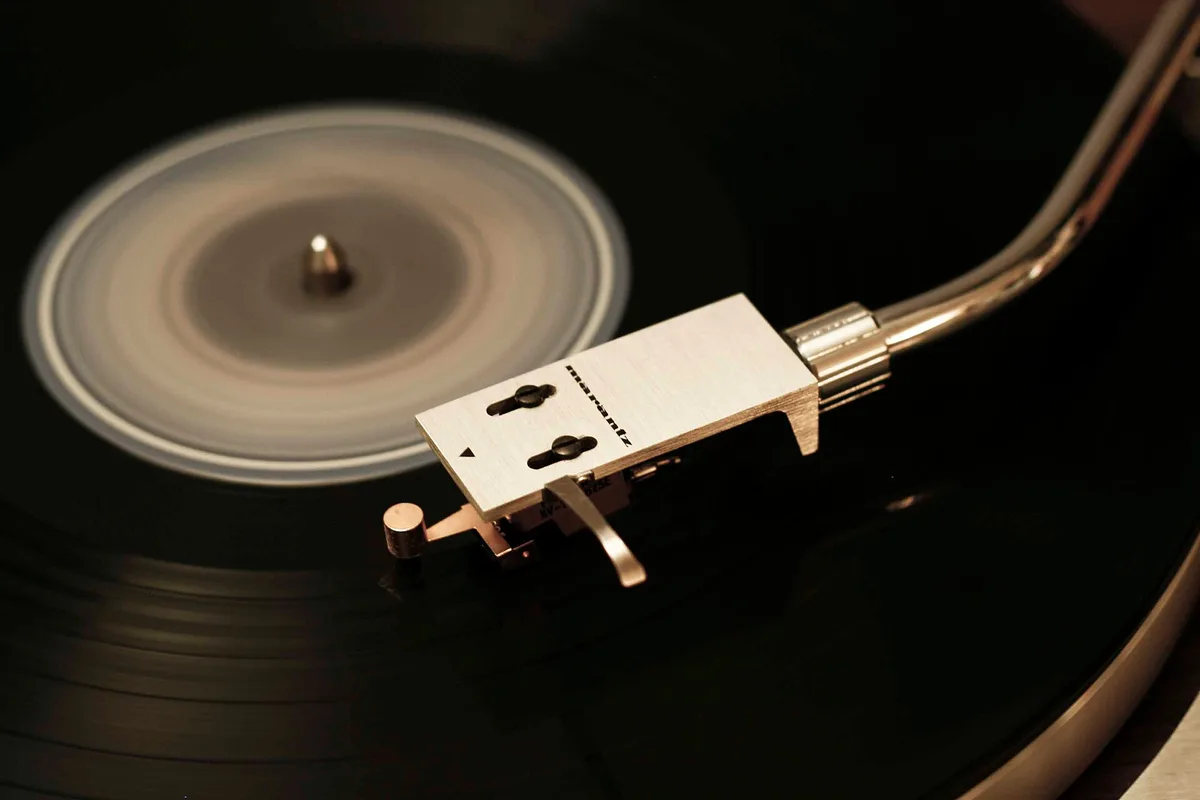
- Cartridge and stylus. Budget decks ship with conical-tip styli in compliant cartridges. The stylus is replaceable, and upgrading it later is the single most common documented improvement path for this class.
- Tonearm geometry. Precise alignment of overhang and offset angle costs money in tooling. Budget arms get close enough, and many accept user adjustment with an inexpensive alignment gauge.
- The built-in preamp. An integrated phono stage adds convenience but shares a power supply and chassis with the motor, which invites noise. Enthusiast practice, documented across decades of service manuals, favors separating them when possible.
Belt drive or direct drive at this price?
Both architectures work, and both have professional pedigrees — direct drive became the broadcast and DJ standard from the 1970s onward because it reaches speed quickly and resists hand-braking, while belt drive isolates the platter from motor vibration with an elastic belt. Under $200 the practical difference is smaller than the debate suggests: a well-made belt drive is quieter, a well-made direct drive is more robust, and a badly made example of either is the real risk. The specification sheet — wow and flutter, rumble, stated wow figures — tells you more than the drivetrain label.
What about all-in-one suitcase-style players?
They are the cheapest way into the format and the most compromised. Historically some used ceramic cartridges with high tracking force — the measure of how hard the stylus presses into the groove — which drew criticism for accelerated record wear; many modern examples have moved to lower-force magnetic designs. The honest framing: they are convenience devices aimed at casual listening, and the engineering margins — tiny speakers, lightweight platters, minimal isolation — are the price of the form factor. Records are more durable than folklore suggests, but a stylus dragging at high force is a documented wear mechanism regardless of the price class.
How much does setup matter versus hardware?
At this price, setup matters as much as the machine. The free wins are documented in every serious manual: level the platter, set the tracking force to the cartridge's stated range using the counterweight, check that the stylus is clean, and keep the deck away from the speakers' vibration path. A deck that skips adjustable counterweight and anti-skate — the small force that keeps the stylus centered in the groove — removes the user's ability to correct geometry, and that omission is worth noticing on a specification list before any purchase.
What is the realistic upgrade path?
The documented sequence most enthusiasts follow: first a better stylus for the existing cartridge, then an external phono preamplifier, then isolation — a solid shelf or platform — and only then a better turntable. Each earlier step is cheaper and improves the whole system, including any future deck. The sub-$200 class is best understood as a doorway: it plays records, teaches the maintenance habits of the format, and tells you through its limits whether vinyl's ritual is for you before the larger investment arrives.