Press play on an album and the running order starts making choices for you: which mood arrives first, how long it holds, and when the record pays off. An album is a collection of audio recordings issued on a medium such as compact disc, vinyl, audio tape, or in digital format. The order of those recordings is not an accident. It is part of the work.
Streaming and shuffle made it easy to forget that. Listening to an album has been made cheaper, more convenient, and more popular by streaming services. But convenience hides a cost. Shuffle treats every track as interchangeable, and the album was built as a sequence. We covered a connected angle in What each music streaming tier actually does to your audio.
The Album Was Designed as a Sequence
The format grew around a fixed order. Early collections of seventy-eight rpm records were sold in bound books that resembled photo albums. The vinyl LP that followed after 1948 held some twenty-two minutes of sound per side, for roughly forty-five minutes of music per record, per the encyclopedia (Wikipedia). The compact disc later became the primary distribution mechanism for recorded music, typically carrying around forty-five to sixty minutes of music. That is a designed span of time, not a heap of files.
The sequence also frames a release as a statement. An album typically holds more tracks than an extended play, which might carry only a single or two or three songs. The longer form gave artists room to pace a full listen, a shape shuffle quietly deletes.
What Track Placement Does
Placement is craft. The opening track sets the terms of the whole listen, so records tend to lead with material that states the album's character. Early tracks earn trust. Middles manage energy. The closer resolves what the record started. Move those pieces around and each one still plays, but the architecture is gone.
Sequencing also manages contrast. A quiet song lands harder after a loud one. A long piece needs a runway before it takes off. Anyone who has programmed a live set knows the feeling: the same songs in a different order make a different show, and records behave the same way.
The Recording Work Serves the Order
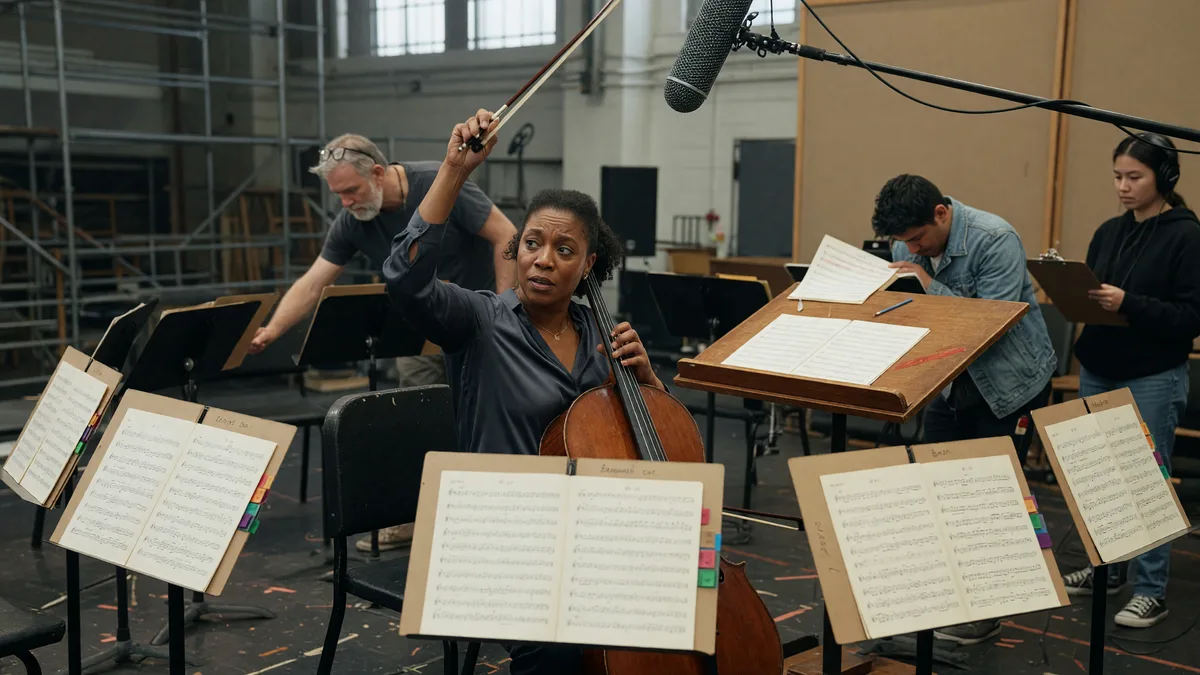
Most albums are recorded in a studio, and the process aims at a fixed running order. Each track, each component piece of the album, usually requires several takes. Different parts may be recorded separately and then mixed together. With multitrack recording, artists collaborating on a track or album can be captured in separate rooms or at separate times, perhaps listening through headphones to parts recorded earlier. A recording done in one take without overdubbing is termed live, even in a studio. Readers following this should also see Budget headphones for honest music listening.
Liner notes extend the design into print. They carry song lyrics, biographical information, and analysis of the recording. All of it assumes a listener who is traveling through the record in order, from front to back.
Making Shuffle Work for You
None of this means shuffle is useless. It is a discovery tool, and a good one. Treat it as a gateway, not a home. When an album interests you, play it from the first track and let the order do its work. Notice how each track answers the one before it. Then shuffle again if you like, and you will hear what the sequence was holding together.
Reviewers hear this too. A record that seems uneven on shuffle often makes sense as a whole, because the order explains why each song exists where it does. Judging a sequence by its shuffled parts is like judging a film by random scenes.
Conclusion: Order Is Part of the Art
An album is a timed, ordered work, carried across decades of formats from bound record books to streaming apps. Sequencing decides how a record breathes, where tension rises, where it breaks, and how it ends. Shuffle is convenient, but it samples the painting instead of viewing it. Play the sequence at least once.