The compact disc is staging a quiet revival: after two decades of decline, CDs are being rediscovered by collectors who noticed three things — the format's audio quality is lossless by definition (16-bit, 44.1 kHz PCM, the Red Book standard set in 1980), the discs are astonishingly durable when handled reasonably, and the second-hand market prices them at a fraction of new vinyl. Vinyl's comeback has been commercially loud; the CD's is quieter and more practical, driven by listeners who want albums whole, cheap, and perfect rather than large and ritualistic. Industry shipments, which cratered through the 2000s and 2010s, have stabilized at a modest level — and at flea-market prices, buyers are building libraries their streaming subscriptions cannot revoke.
What made the CD technologically important?
Introduced commercially in 1982 from a Sony–Philips partnership, the CD was the first mass-market digital audio format and the first optical disc consumers owned. Its Red Book specification — 16-bit samples at 44.1 kHz — was chosen to exceed the limits of human hearing with margin, and its error correction was engineered so a disc could play through scratches and fingerprints that would end a record. Peak CD era followed: the album format's commercial apex ran on compact discs, and the 1990s catalog — from hip-hop classics to indie rock pressings — exists in the tens of billions of discs. That glut is today's supply.
What are collectors actually finding?
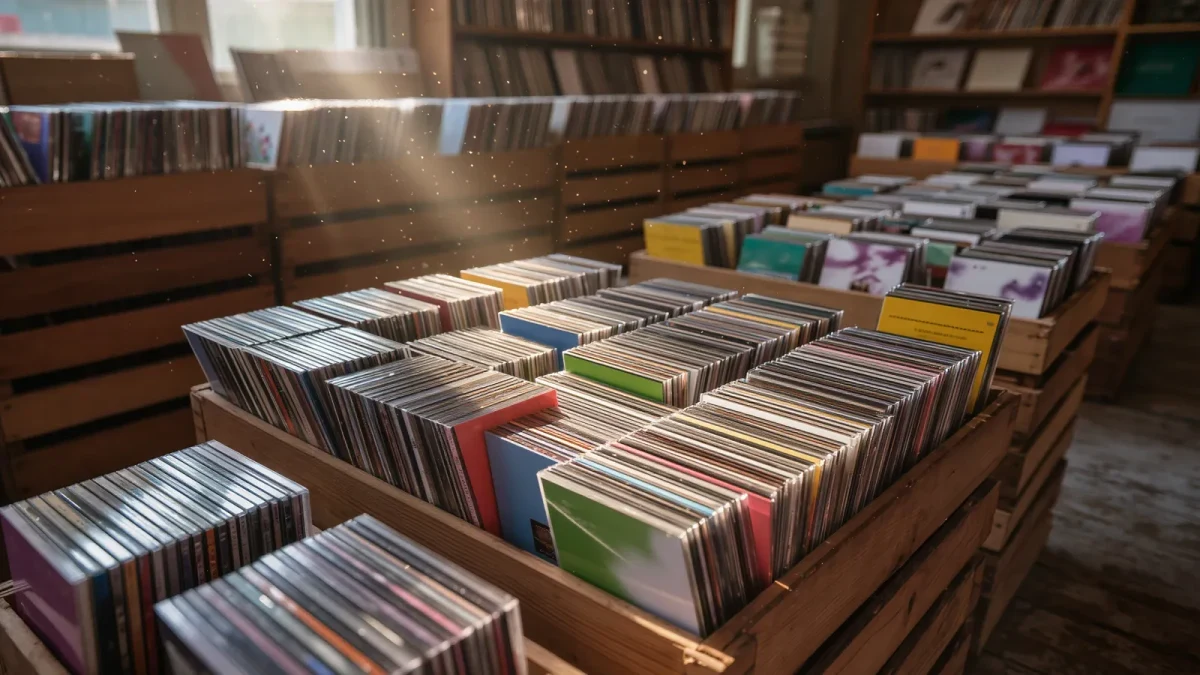
Three documented patterns define the revival's character. First, mastering time capsules: the mid-to-late 1980s and early 1990s CDs were often transferred from master tapes before the loudness war, and collectors seek specific early pressings for their dynamic range — the same logic vinyl collectors apply to first pressings, applied to a format that was supposed to be sterile. Second, out-of-print material: albums that never got vinyl reissues, or whose streaming availability flickers by region, sit in used CD bins for a dollar or two. Third, editions with substance: the CD era's deluxe boxes and booklet design gave lyrics, credits, and photography real space, and buyers who read liner notes value that.
How durable are CDs, really?
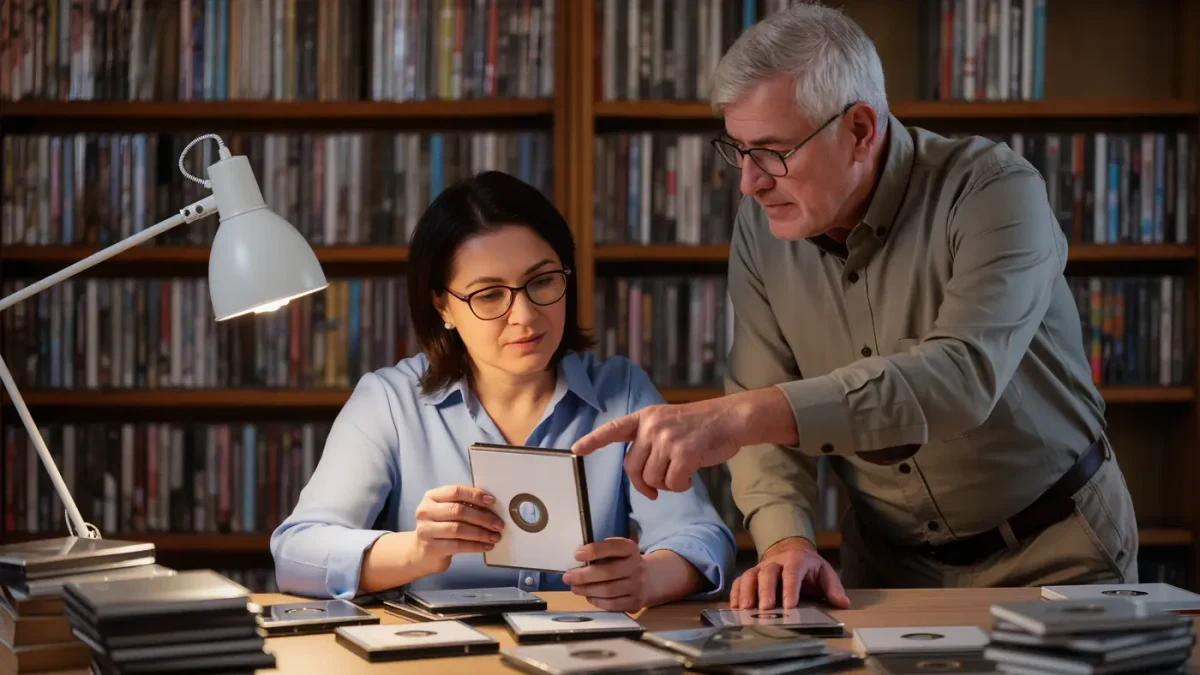
More durable than folklore claims, with documented caveats. The polycarbonate disc reads through its clear side, and light scratches are corrected or interpolated by the error-correction coding designed into the format — a lightly scuffed CD usually plays perfectly. Real risks exist: deep scratches on the label side (where the data layer sits mere microns beneath), cracking from case hub stress, and «disc rot» — delamination or bronzing documented in specific early manufacturing batches, particularly some late-1980s pressings from certain plants. The honest summary: the overwhelming majority of well-kept 1980s discs still play flawlessly, failures cluster in known problem batches, and condition is visually checkable in seconds at the store.
Why are CDs so cheap compared to vinyl?
Supply and association. Billions of discs were pressed, the format fell out of fashion rather than out of functionality, and the collectors' premium went to vinyl for its size, ritual, and artifact status. Used CD pricing reflects a buyer pool smaller than the inventory: common titles go for one to three dollars, coveted early pressings and rarities climb steeply. New CDs persist too — major artists still release them, often bundled with digital downloads, and in several recent years CD revenue has quietly outpaced paid vinyl in some markets' catalog segments even as vinyl's press coverage dominates. The value asymmetry is the revival's engine.
What about playing them?
The practical barrier is hardware: laptops shed disc drives, cars shed players, and a new CD player is now a specialty purchase. Yet the ecosystem works — used players and disc-changing jukeboxes are abundant and cheap, USB drives rip discs to lossless files for phones, and ripping is legal for personal backup in many jurisdictions (check yours). A ripped FLAC of a well-mastered CD is, measurably, a lossless copy of the master as delivered — the exact quality hi-res tiers upsell, minus the ultrasonics nobody can hear. In that sense the humble dollar-bin CD is the streaming age's quiet cheat code.
What should buyers watch out for?
A few documented cautions. CD-Rs — recordable blanks, distinguishable from pressed discs by their dye color and lack of a data-side sheen — were never engineered for archival life and are the format's genuinely fragile branch; a burned mix from 2003 is a far riskier purchase than a pressed disc from 1988. Cardboard sleeves and early slim cases scuff disc edges against the hub. And collectors note the same first-pressing logic as vinyl: original-issue CDs of classic albums often carry the earliest, most dynamic master, while later «remastered» reissues sometimes apply the compression the revival was supposed to escape.
Is this a revival or a niche?
Both, honestly. CDs will not retake the mainstream; streaming owns convenience. What the format retains is ownership — a physical, lossless, permanent copy of the album — at a price no other medium matches. Collectors describe the same motive across revival reporting: libraries, not playlists. The disc that was supposed to die as a fragile transitional technology turns out to be neither fragile nor transitional, just unfashionable — and, for now, astonishingly inexpensive.