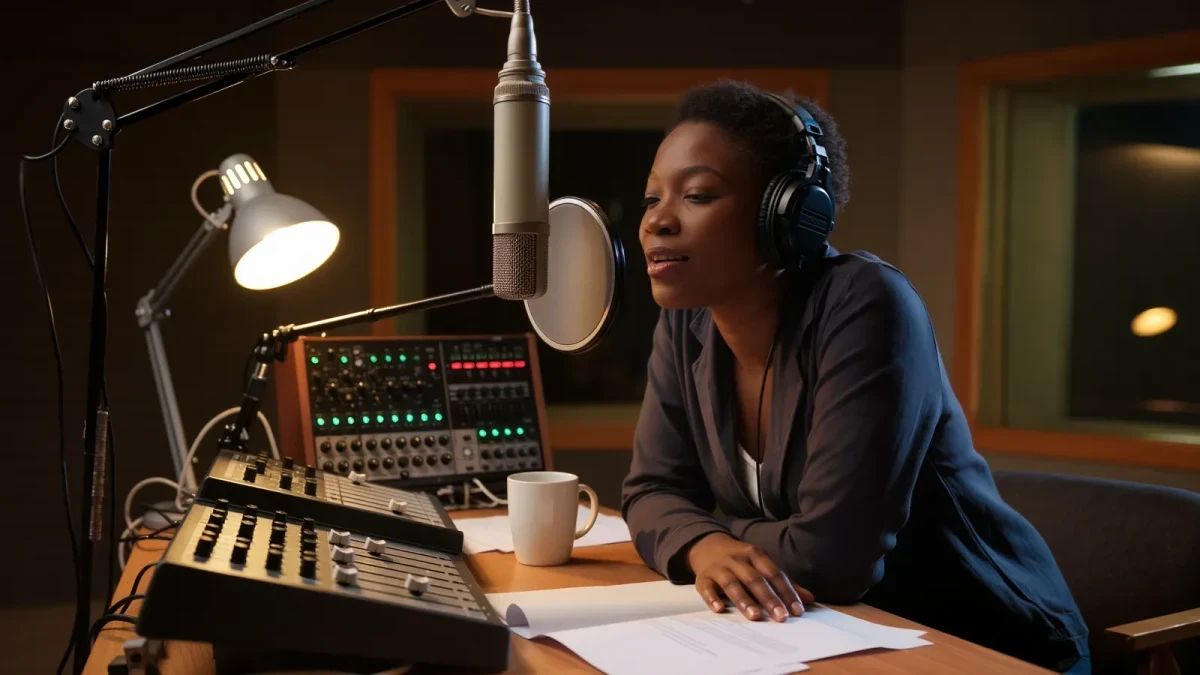
Late-night radio hosts occupy broadcasting's most intimate shift: the hours from roughly midnight to dawn, when a station's audience shrinks to night-shift workers, long-haul drivers, new parents, and the sleepless, and the host speaks to each of them almost privately. The format is as old as radio itself — clear-channel AM stations of the 1930s and 1940s blanketed the continent after dark, and all-night hosts became national companions decades before television had a late fringe. Hosts like Larry King built whole careers on the shift: his overnight Mutual radio program, launched in 1978, ran for years as a coast-to-coast conversation in the dark.
AA Digital Sound is a magazine about radio culture, not a broadcaster; this primer looks at where the late shift came from, who has hosted it, and why it still draws devoted listeners and programmers.
Why does overnight radio sound so different?
Because the rules of the day invert. A daytime host works against distraction — tight breaks, big energy, constant forward motion — while the overnight host works with quiet: slower pacing, longer songs, unhurried talk, and the assumption that many listeners are alone. Programmers have long treated the shift as protected space for exactly this reason; a voice that matched morning-drive energy at 3 a.m. would feel like an alarm clock. The technical history matters too. After sunset, AM signals skip off the ionosphere, so a single station could be heard across half a continent — creating, in effect, the first national chat rooms, with hosts reading letters from listeners time zones away. Many all-night hosts built their identity on that reach, trading on a paradox: the biggest signal of the day carrying the smallest-feeling audience.
Who listens at three in the morning?
A more faithful audience than any daytime slot earns. Third-shift workers — factories, hospitals, warehouses, truckers on interstates — keep the radio on for company as much as content, and their listening is measured in hours rather than quarter-hours. New parents, insomniacs, students, and early risers on the other side of the world, streaming a favorite host from another continent, round out the room. Hosts describe the resulting relationship as unusually personal: callers lower their voices, confide more, and stay for decades. Broadcasting historians have noted that all-night hosts received some of radio's most devoted mail for as long as stations have kept letters — a pattern that continued into email, phone logs, and podcast messages.
What are the shift's own rituals?
The late shift has a folkloric texture daytime radio lacks. There are the dedications — a song for someone on a factory line, a caller remembering a spouse on a long drive. There is the time check, delivered like a reassurance rather than a schedule item, and the ritual marking of first light, when hosts tell listeners they made it through. Station cats, diner runs, the engineer in the next room, the peculiar silence of a building at 2 a.m. — host memoirs and oral histories return to these details so consistently they amount to a shared job description. The schedule itself shapes the culture: overnight hosts sleep when the world works, miss evenings with friends, and describe, in interview after interview, a feeling of existing slightly apart from ordinary time.
What happened to overnight radio after consolidation?
It thinned, as live bodies did everywhere. Voice-tracking — one host recording breaks in advance for many markets — replaced live overnight staff at a long list of commercial stations from the 1990s onward, and syndicated overnight music and talk products took the shift national in a different way than the clear-channel era had. What survived and grew was the noncommercial version. Community, college, and public stations kept — and still keep — live overnight programming, partly because volunteer programmers want the hours and partly because freeform experimentation fits the low-stakes slot: the strangest jazz, the deepest genre shows, the host who plays one album side per hour with long silences between. For listeners, the practical divide is well known among radio fans: the commercial overnight dial is often pre-recorded, while the community end of the dial is frequently live.
Why does the late-night host still matter for music discovery?
Because the slot is radio's laboratory. Overnight is where new records get their first full plays, where a host can follow a twenty-minute track with a spoken-word piece and lose nothing, and where genres without a commercial home — experimental, free jazz, ambient, regional traditions — find consistent programming. Many beloved specialty shows live in the overnight grid for precisely this reason: the audience is small but complete, present by choice. A generation of musicians and DJs trace their formation to a specific overnight host, the way earlier generations traced theirs to the clear-channel voices; ask around any freeform station and the lineage comes up within minutes. The late shift, in other words, is where radio keeps its permission to be strange.
Is the culture of the late shift disappearing?
Changing, not disappearing. Streaming dissolved the transmitter's schedule, so an overnight show now has daytime listeners elsewhere — a documented pattern for community stations whose 3 a.m. programs found audiences through archives and streams. What is genuinely at risk is liveness: the value of the shift was always that someone was actually awake, actually there, and pre-tracking quietly removes it. Where stations keep a live human after midnight — and many do — the old culture holds: the lowered voices, the dedications, the host who says the sun is coming up on your side of town.