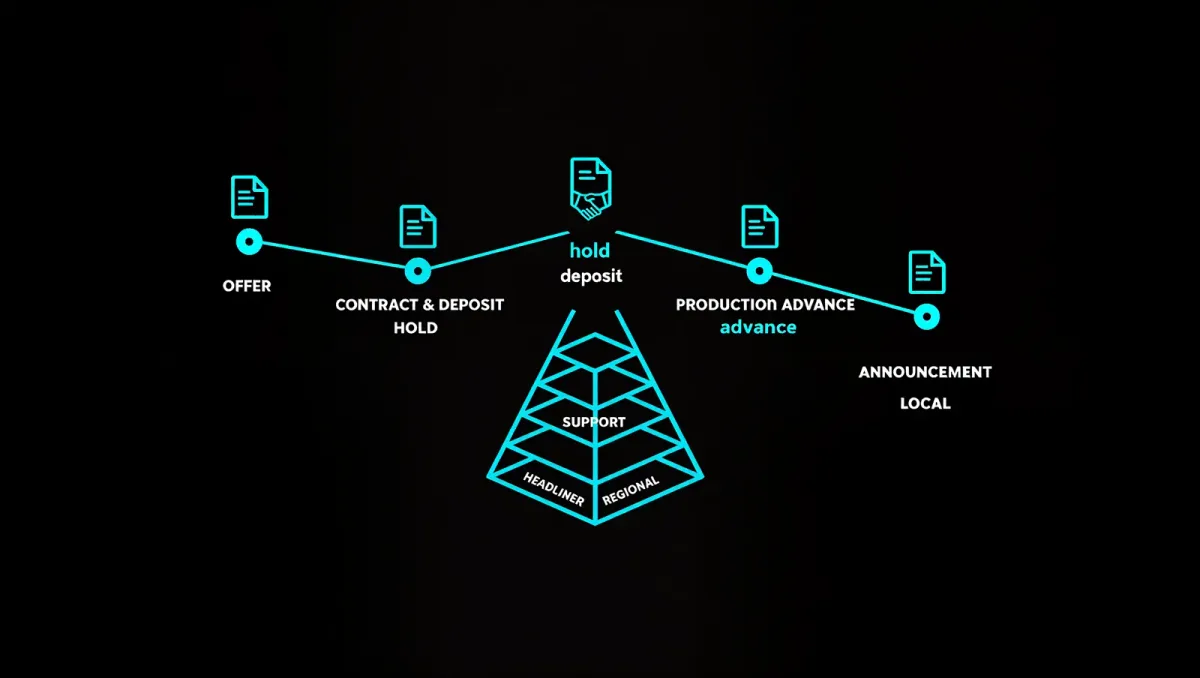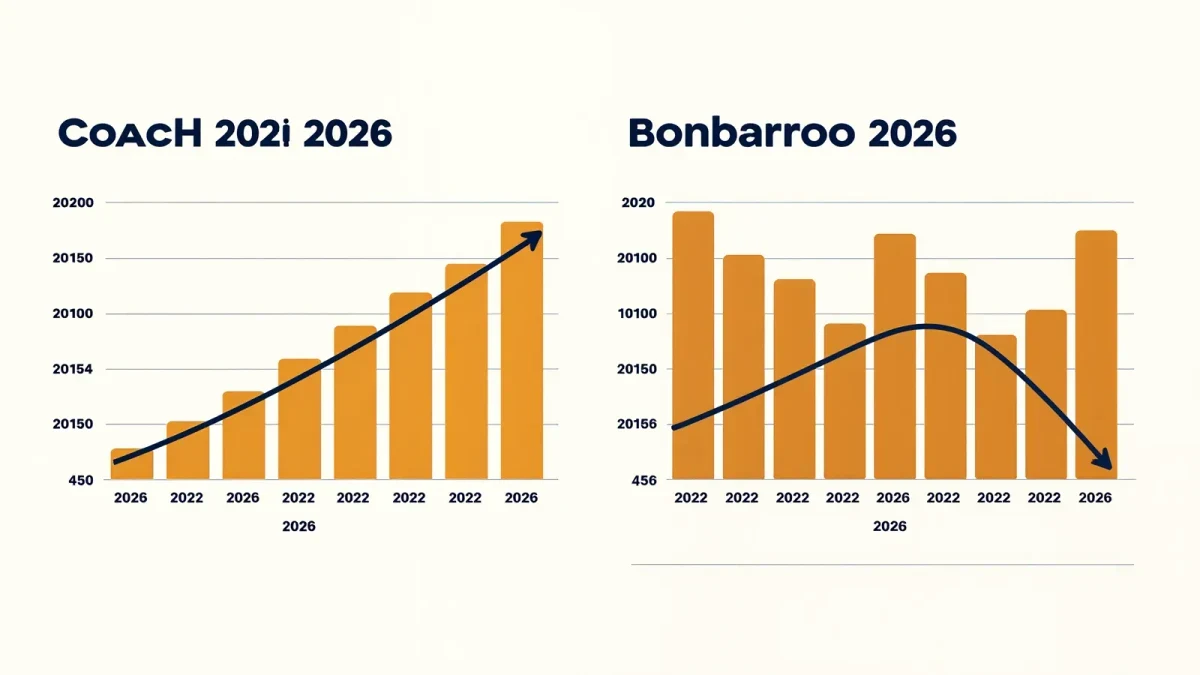
The 2026 festival season shows the arithmetic of booking economics in plain view: Coachella, held April 10–12 and 17–19, 2026, booked fewer artists than in recent years while raising general-admission passes to $649 for the first weekend and $549 for the second, with VIP tiers from roughly $1,199, per trade ticket reporting — a structure directly shaped by headliner fees that industry estimates now place anywhere from $3 million upward for a single top-tier set.
Why are festivals booking fewer artists?
Talent is the largest line item, and the top of the market has inflated fastest. When one headlining set can cost seven figures, a festival covers its exposure by trimming the undercard — fewer mid-bill slots, leaner billing days — and raising ticket prices to protect margin. Bonnaroo, held June 11–14, 2026, in Manchester, Tennessee, offers the same shape at a different scale: four-day packages from a $435 general-admission tier up to roughly $3,995 at the top, per festival pricing announced when tickets went on sale December 5, 2025.
Where is the market expanding?
Growth is coming from outside the traditional US circuit. Per Reuters on April 17, 2026, South Korea's largest K-pop labels are considering launching a Coachella-scale global festival spanning K-pop and Korean popular culture — new capital entering a market where incumbent events are consolidating their costs.
Why it matters
Festivals are discovery engines by design: the mid-afternoon slot on a side stage is where casual fans meet unfamiliar artists. When economics compress the undercard, the loss is not just variety but the exposure ladder itself — the route by which a college-radio favorite becomes an amphitheater act. The 2026 season suggests that ladder is getting narrower at exactly the moment headlining prices are getting higher.