Radio broadcasting is preserved by a patchwork of national institutions, university libraries, and volunteer projects, because almost none of it was saved at the time. Broadcasting's core preservation landmark in the United States is the National Recording Registry, which the Library of Congress has maintained since 2002 under the National Recording Preservation Act of 2000, selecting recordings of cultural significance — radio among them — for preservation each year. Against that stands a harder fact, documented by the Library's own preservation planning: a large share of recorded sound from before the 1960s is already lost, and radio is the most fragile category of all, since most programs aired live, once, and the discs and tapes that survive were saved by accident, habit, or foresight.
AA Digital Sound is a magazine about radio culture; this primer maps the documented preservation landscape — who saves broadcasts, how, and what listeners gain when they do.
Why wasn't radio saved in the first place?
Economics and storage. Broadcasting was a live medium: a show went out over the line and vanished, unless someone deliberately recorded it — on a transcription disc before tape, or on magnetic reel after tape recording spread in the late 1940s and 1950s. Recording cost money, discs and tape took space, and reuse was standard practice; networks wiped and re-recorded reels the way later generations taped over cassettes. Rights complicated archiving too — a music program cleared for one broadcast was not cleared for preservation or rebroadcast — so even saved material often sat locked. What survives frequently survived sideways: syndication copies mailed to stations and never returned, an engineer's personal off-air recording, a station's transcription of its own anniversary special. Archivists describe radio history as reconstructed from exactly such fragments.
What are the major radio archives?
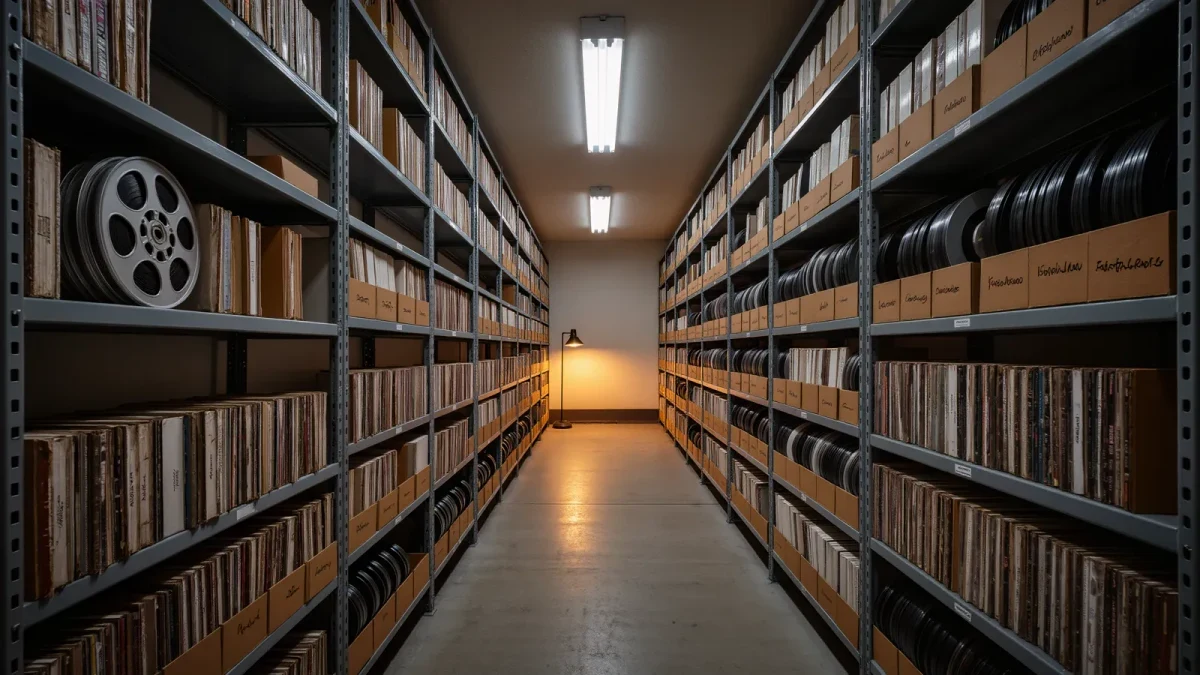
A few institutions anchor the field. The Library of Congress holds vast broadcast collections — early radio transcriptions, oral histories with broadcasters, and the preservation infrastructure of the National Recording Preservation Board, established by the same 2000 act. The Paley Center for Media, founded in 1975 as the Museum of Broadcasting, collected radio and television programming for public access. University collections matter enormously: academic libraries hold station archives, news-broadcast collections, and regional radio history. The BBC maintains an archive of its own output — though famously incomplete, since the corporation wiped or re-used large portions before the value of the archive was fully realized; its best-known losses include much of early television drama, a cautionary tale that reshaped BBC retention policy. Beyond the big names sit hundreds of local collections: state historical societies, museums, and stations' own basements, where uncataloged reels wait.
What is being preserved right now?
Both the old and, increasingly, the fragile recent. Wax cylinders, lacquer transcription discs, and acetate reels are the urgent legacy media — lacquer discs in particular deteriorate on their own schedule, delaminating as they age, which gives digitization projects a literal deadline. Digital formats have their own decay: station hard drives, automation logs, and streaming archives from the 2000s face format obsolescence just as tapes faced mold. Community-driven projects have taken on distinctive slices — there are documented volunteer efforts to preserve college radio recordings, community-station archives, and air-check collections of DJs' shows, precisely because no institution was going to do it. Preservation also includes the apparatus: station photographs, program guides, logs, and the oral histories of engineers and programmers who are, in many markets, the only remaining record of how a station actually ran.
How does digitization actually work?
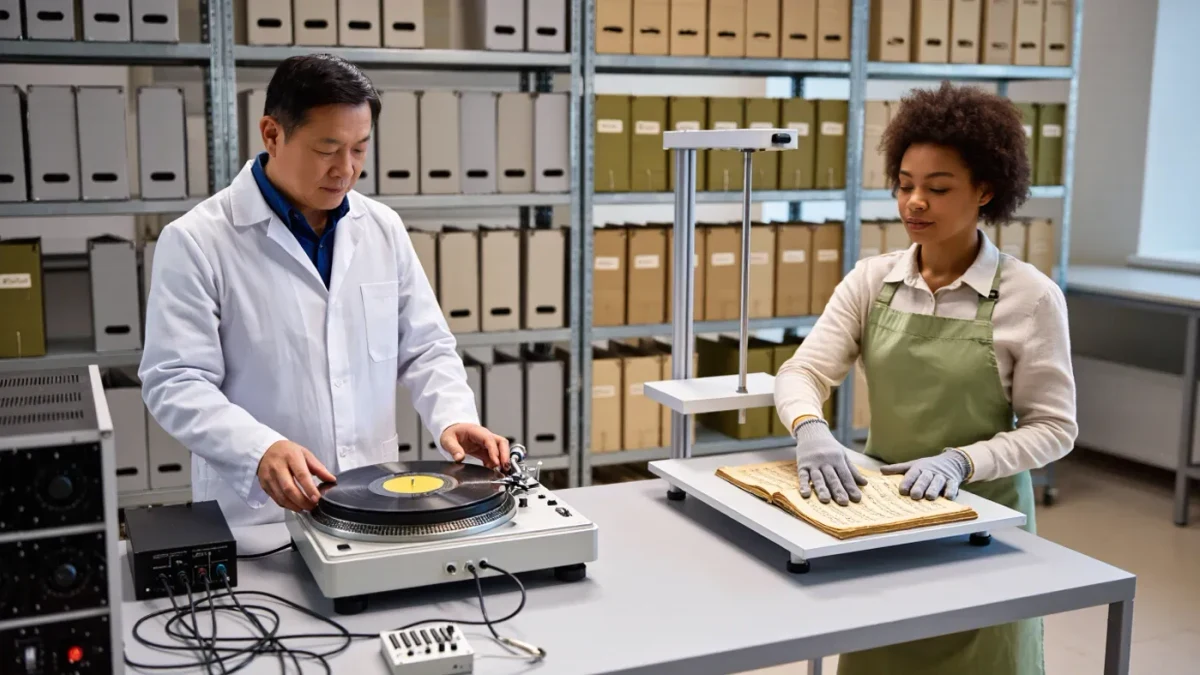
Slowly, by hand, at playback speed. Archivists clean and stabilize the carrier, play it on calibrated equipment, capture a preservation-grade digital copy at high resolution, and store that master redundantly — the standard doctrine of multiple copies in multiple locations, with format migration planned as routine. Description is half the labor: an unlabeled reel is of little use until someone identifies the date, station, and program, often by tracing the music played or reading the announcer's references. Access comes last and is governed by rights: much preserved radio can be cataloged but not rebroadcast, because music and program rights never contemplated archival streaming. That is why archives often make recordings listenable on site or share excerpts, while full public release waits for rights clearance.
Why does any of this matter for music?
Because radio's archive is music's living record. The preserved air-checks of jazz and early rock programs are primary sources for how records were introduced, how DJs talked, and which performances were broadcast once and never issued. Reissues and historical label projects draw on transcription discs; biographers mine station logs; the rediscovery of a lost broadcast can change an artist's documented catalog. For music discovery culture, the archive is where context comes from — the reason a 1950s R&B record or a 1980s college-rock add can be placed in its moment. When preservation fails, that context is simply gone; no streaming catalog can reconstruct a show nobody kept.
How can listeners help?
Noticing what they hold. Archivists ask the public to surface recordings before they degrade — family reels of a parent's radio career, station tapes rescued from a closing building, even labeled air-checks in a crate at an estate sale. Bringing material to a library or state archive, with whatever provenance is known, is the single most useful act; institutions prefer a phone call over a donation left in the sun. And listening matters too: archives that see public use are archives that keep their funding.