A song reaches college radio rotation when a station's music director decides it deserves airtime, a DJ logs the spin — commonly through a platform such as Spinitron — and, at reporting stations, that data feeds an industry tracker like the NACC chart; the same submission-to-airplay pipeline first carried R.E.M. onto the University of Georgia's WUOG in 1980.
Who has to say yes before a song gets added?
At most noncommercial stations, that call runs through a music director or program director — the same role the North American College and Community Radio chart names as its required point of contact. A station that wants its spins counted toward the chart is instructed to have that person, not a DJ or a label representative, reach out with the station's call letters and market information, according to NACC's own reporting instructions.
At the University of Georgia's WUOG 90.5, that job currently belongs to co-music directors Elizabeth Kim and Mal Holmes, who curate programming built around the Athens, Georgia music scene from the station's home in UGA's Tate Student Center, NPR reported in 2024. WUOG first signed on in 1972, and the stakes of an add decision are not hypothetical there: the station was the first to broadcast R.E.M., in 1980, before the band became what the outlet called "Athens' biggest band."
What are the steps between a DJ's decision and an industry chart?
The path from a single spin to a line on a national chart runs through a handful of documented stops:
- A DJ plays a track during a live shift, at the station's own discretion.
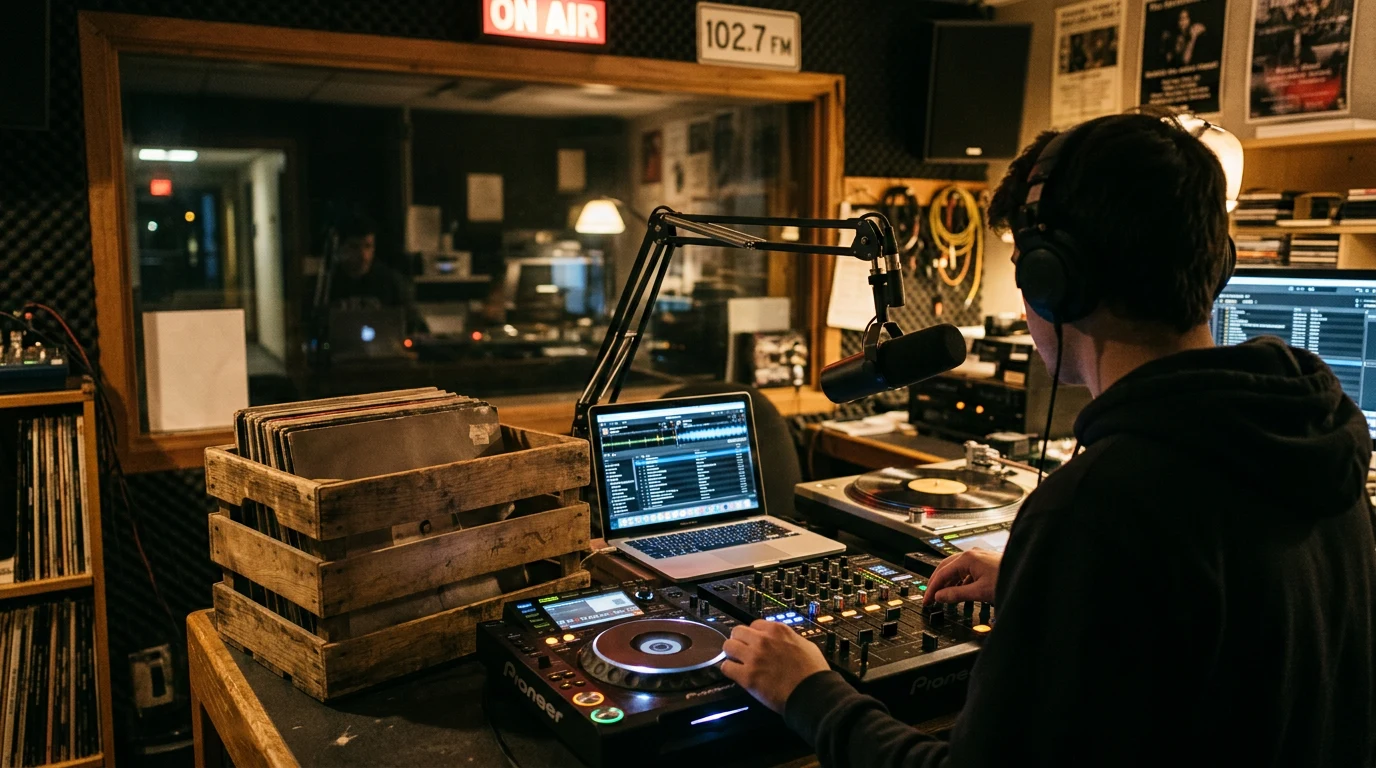
- The spin gets logged. Many noncommercial stations use software such as Spinitron, a cloud-based platform that needs no software installation and supports manual web-based entry from a large autocomplete database, playlist uploads from other systems, and automation-system integrations that log songs automatically.
- Those logs build a public, browsable playlist archive — searchable by date, DJ, or show — the same kind of record Spinitron says "artists, promoters and record labels" use to check where a song has aired.
- The same spin data doubles as the basis for copyright-compliance reporting; Spinitron advertises "unlimited reporting for SoundExchange, BMI, and the rest" built into the platform.
- At stations that choose to report, that data flows outward. NACC compiles weekly raw reporting data from its reporting stations and genre shows into rankings that include the NACC 200 and genre-specific charts.
Is charting on NACC the same thing as getting played?
Not quite — the two systems track related but distinct events. A spin is counted every time a song airs, which is what Spinitron logs in real time, with unlimited user accounts so a station's whole DJ roster can log directly. An "add" marks the separate moment a music director puts a track into a station's rotation in the first place, and NACC sells that distinction to subscribers as standalone "top adds" data, alongside station contact databases and historical chart records.
The chart's own structure reflects how granular that tracking gets: a single album can complete what NACC calls a "Hat Trick" by reaching No. 1 on the NACC 200, the NACC NEXT chart, and the NACC Non-Comm chart at the same time — three separate rankings built from the same underlying reports.
Why does this pipeline matter beyond the numbers?
Because it's the quiet infrastructure behind stories like WUOG's. A student music director's single decision to add a local band in 1980 turned into R.E.M.'s launch pad, and NPR's 2024 reporting credits the station with a broader "legacy of getting the music made in Athens out to the wider world." That kind of outcome depends on the unglamorous machinery described above: someone with the authority to say yes, a system to log that yes accurately, and — for stations that opt in — a chart that lets labels, promoters, and other stations see the pattern once enough yeses add up.
None of that requires a station to be large or commercial. Spinitron says it is trusted by more than 300 noncommercial community and educational stations, and NACC's reporting process is open to any station whose music or program director reaches out — which means the same pipeline that broke R.E.M. out of Athens is, structurally, still running today.
Frequently asked questions
- What is Spinitron? Spinitron is a web-based playlist management platform used by more than 300 noncommercial community and educational radio stations, according to its own site. It lets DJs log spins live, archives playlists publicly, and compiles chart data such as weekly top-100 tabulations by genre or timeframe.
- What is the NACC chart? The North American College and Community Radio chart tracks weekly spin data reported by college and community stations across North America, publishing rankings such as the NACC 200 alongside genre-specific charts and "top adds" data, per the chart's own site.
- Who decides whether a station reports to NACC? NACC's own instructions direct that decision to a station's music or program director, who must contact the chart directly, listing the station's call letters and market information, before any of its spins count toward the weekly rankings the chart publishes.
- Can a listener see what a station has actually played? Often, yes. Spinitron gives many reporting stations a public, browsable playlist archive organized by date, DJ, or show, plus web-embeddable widgets — the same searchable record that Spinitron says labels and promoters use to check where their music has aired.