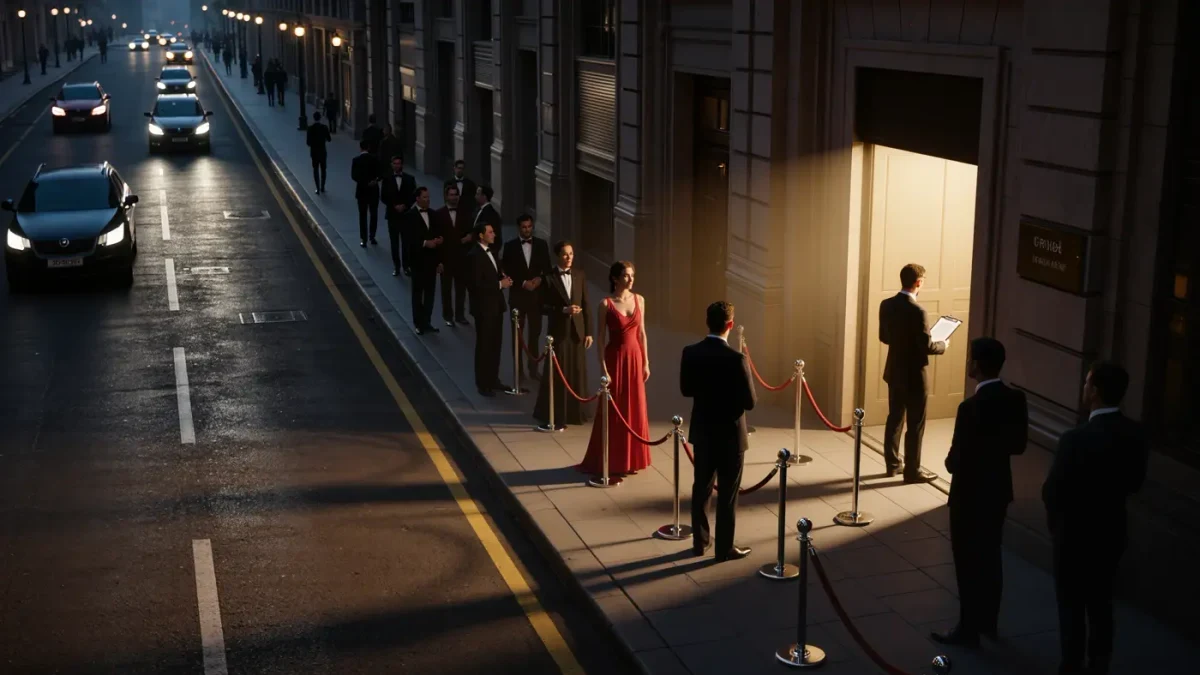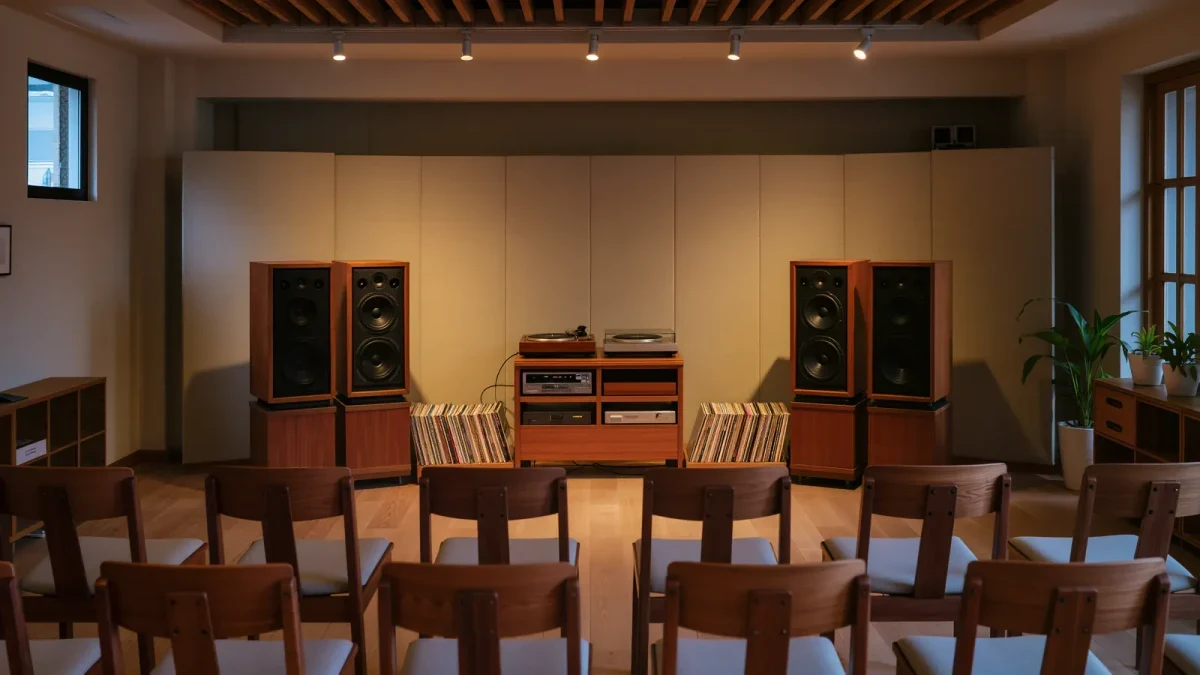
A listening party is a scheduled, collective playback of a record — an event where the music is the activity, not the background — and it remains one of the most powerful discovery formats because attention is shared and verifiable in the room. The form runs from a living room with a turntable to stadium-scale playback events like the documented listening sessions Kanye West held for his 2021 album, which drew tens of thousands and moved the record's release date with each iteration. Between those poles sits a whole culture of album-play nights, listening bars and premiere playbacks that has grown steadily through the 2020s.
AA Digital Sound writes about listening culture as an observer; no event described is an endorsement, and the historical examples below are documented in contemporaneous reporting.
Where did collective listening come from?
It predates recorded music's private era entirely. Public concert and dance-hall culture made hearing a social act for centuries; radio made it simultaneous across a city; and the phonograph's first decades were often communal, with parlor playback as a household event. The hi-fi era pushed listening into private rooms, but the ritual never fully left — NPR-style album premieres on the radio, midnight store openings for major releases, and the listening sessions that hip-hop labels ran for press in the 1990s all kept the form alive. The 2020s turn is less an invention than a re-scaling.
What happened in the 2020s?
Two documented shifts. First, the pandemic's release-week livestreams and couch listening normalized premiere playbacks, and the habit stuck. Second, dedicated venues appeared: listening bars in the hi-fi-audio tradition — modeled on the Japanese kissa, the jazz kissaten culture where patrons pay to hear records on serious systems in silence — opened across Western cities through the 2020s, and audio manufacturers' sales figures for turntables and speakers reflected a sustained hi-fi boom, as industry reporting through 2025 consistently showed. The listening party moved from ritual-of-necessity to nightlife category, with cover charges and sound-system riders.
Why does hearing music with strangers change how you hear it?
Three mechanisms, and each is observable at any good event. Attention is enforced socially — you cannot skip, and the room's silence disciplines the phone. Reaction is information: the collective intake of breath at a beat drop, the laugh at a punchline, the shuffle during a weak stretch all read the record faster than a solo listen. And a shared first impression bonds a record to a memory, which is why decades of fans can tell you exactly where they were when an album premiered. Reuters' pandemic-era coverage of at-home listening and later nightlife reporting both traced how communal listening rebounded once gathering returned — the appetite had not gone anywhere.
What are the formats worth knowing?
- The living-room album night — one record, one system, phones down; the oldest and cheapest form.
- The listening bar — a venue built around an audiophile system and a no-talking norm, per the Japanese kissa model.
- The store midnight release — a retail ritual dating to CD-era blockbusters, still running for major vinyl releases.
- The playback event — arena-scale premieres in the 2021 mold, part concert, part staged listening.
- The listening club — a recurring series with a theme and a host, the book-club model applied to records.
How do you throw one that actually works?
Constraints do the work. One album, played in order, start to finish, with the lights low and the volume honest — no crossfade into conversation. Front-load the social part before the needle drops, and hold questions until the flip. Rotate who picks, because the format's discovery value depends on records the room would not have chosen individually. Keep the guest list at the size where side talk is self-policing — usually under fifteen. And respect the rule that separates listening culture from background culture: the record is the event. If the room treats playback as an occasion, even skeptics will sit through an unfamiliar artist's full side; that patience is exactly what discovery needs and exactly what solo streaming removed.
Why does the format matter for discovery specifically?
Because it is the only discovery channel with a built-in finish rate. Every other channel — feeds, playlists, radio — fights the skip button; a listening party abolishes it, socially. Unfamiliar records get the full-album hearing that deep-cuts culture, regional scenes and long-form genres need in order to land at all. The historical pattern is consistent: scenes with strong collective-listening rituals, from Northern Soul all-nighters to Jamaican sound-system dances, kept obscure catalogs alive for decades because rooms kept listening to them together. The listening party is discovery infrastructure dressed as a night out.
What should you bring as a guest?
Less than you think. The etiquette of listening events is short and consistent: arrive before the record starts, silence the phone entirely, keep conversation to the between-sides break, and direct enthusiasm at the room rather than the phone camera. At listening bars, the no-talking norm is the product you are paying for — the same deal a cinema offers. Hosts, for their part, owe honesty about volume, seating and one announcement of the ground rules, because first-timers only convert to regulars when the format is explained rather than enforced by glares. The form is old, the plumbing is new, and the social contract is the whole mechanism.
Alone, you skip. Together, you stay — and the staying is where unfamiliar music becomes favorite music.