Independent artists building direct audiences have three landmark documented cases: Radiohead's In Rainbows (October 2007), released as a pay-what-you-want download with no label at the gate; Macklemore & Ryan Lewis's The Heist (2012), self-released and distributed through the Alternative Distribution Alliance, which won the 2014 Grammy for Best Rap Album; and Chance the Rapper's Coloring Book (May 2016), a streaming-only mixtape that won the 2017 Grammy for Best Rap Album — the first streaming-only release to win a Grammy, a fact the Recording Academy itself noted.
Going direct means owning the master recording, the fan relationship, or both, while using services — distributors, ticketing, platforms — à la carte. This piece traces what the documented cases actually did, and what the model looks like as of the mid-2020s.
What did Radiohead's 2007 experiment prove?
That a major act could route around the label system entirely for a release — once. In Rainbows was announced on October 1, 2007 and released ten days later as a download for whatever buyers chose to pay, through the band's own site. The band never published complete sales figures, but the release's aftermath is documented: the album topped the UK and U.S. charts in its physical XL/TBD release in January 2008, and the episode forced the industry to take digital self-release seriously. The experiment also proved the limits — most artists lack the audience Radiohead had spent fifteen years building with a label's money. Critics noting the case's asymmetry, including BBC News in anniversary coverage, treat it as a proof of concept rather than a template.
How did Macklemore and Chance the Rapper win Grammys without labels?
By pairing independence with distribution deals and relentless touring. Macklemore & Ryan Lewis released The Heist in October 2012 on their own Macklemore LLC, with distribution by ADA — a Warner Music-owned service that takes a fee rather than ownership. The singles "Thrift Shop" and "Can't Hold Us" both reached No. 1 on the Hot 100 in 2013, and the album won the Best Rap Album Grammy in January 2014. Chance the Rapper went further: Coloring Book debuted on Apple Music in May 2016 in a streaming-exclusive window, was never sold as a download at first, and won the 2017 Grammy after the Academy changed eligibility rules to admit streaming-only releases — a rule change the Academy documented at the time.
What does the direct model look like now?
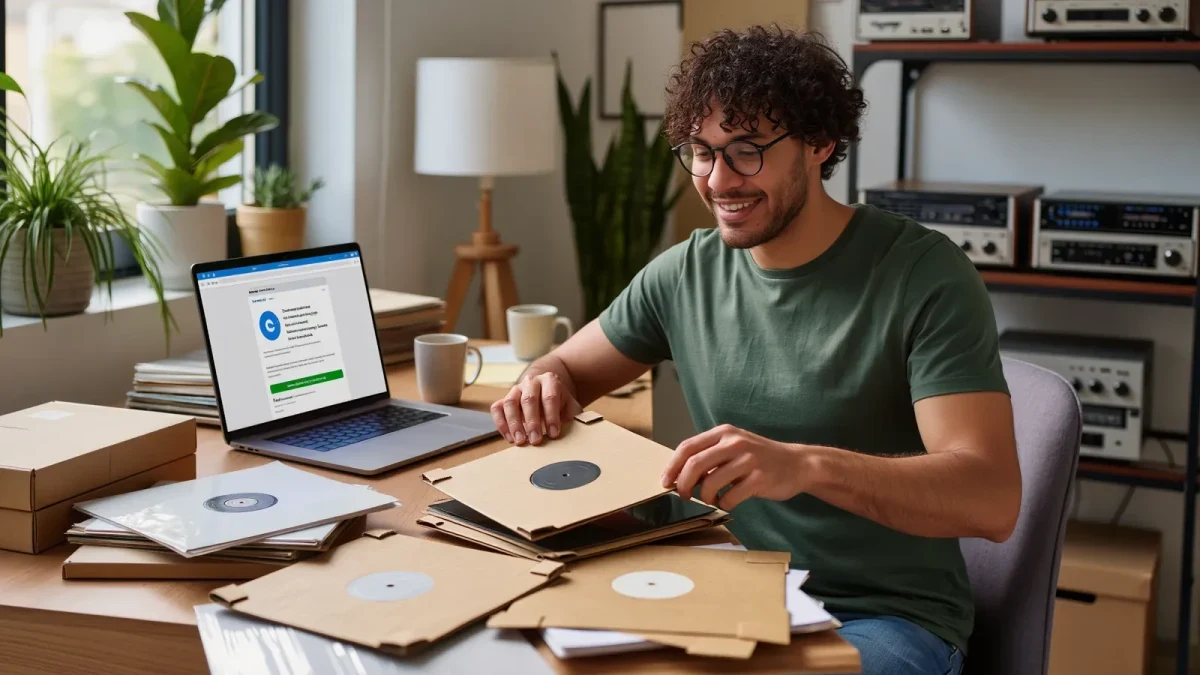
By the mid-2020s the documented toolkit has consolidated around a few channels: digital distributors that place music on streaming services for a flat fee; Bandcamp, whose Friday sales events during 2020's lockdowns were widely reported to have routed meaningful money directly to independent artists; Patreon-style subscription tiers; and vinyl as the high-margin physical product — with vinyl revenue, as trade bodies including the RIAA have reported in year-end figures since 2020, outgrowing CDs in the U.S. BBC News has covered the vinyl revival's production bottlenecks repeatedly since 2021, and those constraints — pressing-plant queues — are now a practical limit on independent physical strategy.
- Masters — own the recordings; license rather than sign away.
- Distribution — flat-fee digital distribution for streaming placement.
- Direct sales — Bandcamp-style storefronts and vinyl pre-orders as margin.
- Subscription — recurring fan tiers replacing the label advance.
- Touring — the documented backbone of every independent case above, from Macklemore's van years to Chance's festival circuit.
Is the direct path realistic for new artists?
For a living, often yes; for a Macklemore-scale outcome, rarely. The documented winners had unusual assets — Radiowood's catalog fame, Macklemore's years of regional groundwork, Chance's Chicago network and the free-mixtape tradition behind him. What the model has done, as of the mid-2020s, is change the baseline: artists now arrive at label negotiations with streaming data and a mailing list, which shifts the terms even when they do sign. The independence is most powerful as leverage, and the history above is the evidence file.
What are the honest risks of the direct model?
The documented cases carry warnings alongside the wins. Direct distribution means direct responsibility: marketing, sync licensing, accounting and rights administration all become the artist's own line items, and the trade-off for keeping the master is funding everything a label once funded. Vinyl's production bottlenecks, reported on by BBC News since 2021, hit independent releases hardest, because major labels hold pressing-plant priority. Streaming economics favor scale that most self-releasing artists never reach — the widely reported per-stream economics that motivated Bandcamp's rise as an alternative. And the three landmark cases each had an asterisk: Radiohead had fifteen label-built years behind them, Macklemore used a major-owned distributor, Chance's Apple Music window was itself a platform deal. The honest reading of the evidence as of the mid-2020s is not that labels are unnecessary but that their necessity is now negotiable item by item — a negotiation whose strength depends entirely on the audience an artist has already assembled by other means.